
Make fueling
suck less.
Well, at least that’s the goal. We’re working on improving the way salts and sugars get delivered — and on whether you can keep fueling strong hour after hour.
Want to be a product tester?
One letter a month, and first crack at the test batches. Unsubscribe whenever.


Every athlete has a fueling failure story.
“Gotta have those pukes. It’s part of the initiation.”
“My first few events, I knew nothing about it. That first 30K I did, I ended up in the medical tent because I was having such bad cramps I couldn’t even walk back to my car. [The medic] was like, how much fuel or electrolytes did you have? And I said — none. I just drank a little bit of water. She’s like, what the hell is wrong with you?”
“Sometimes I’ll get to the end of a run where I have three or four miles left. I’m like, God, do I really need another gel? And I won’t take another gel. And then at the end I’m like, that was stupid. I should have just taken that last gel.”
“One of the problems I’ve had in the past is at the beginning of a race, you feel good. And I’m like, well, I feel good, I don’t need any fuel. But in a full [marathon], it’s later when you need it. You should have had it when you felt good rather than when you start to feel bad — and once I feel bad, I have a really hard time getting it in.”
“I know what it’s like to, at mile 16, decide your stomach can’t handle more [gels] and try to run the last 10 miles with nothing. My brain is the first thing to go when I hit the wall. In theory my legs are not so beat up that I can’t keep running, and my breathing is fine — but I just get lightheaded, like my brain’s not getting any fuel.”
“The last hour or two I could not stomach anything but Sour Patch Kids or gummy worms. That was the only thing I could keep down, because I had gone through enough. I learned the hard way, going through some of the packaged products — too many too soon.”
“I should have done two salt tabs, because I started cramping around mile 27. The calories I did well. And then the electrolytes — it was just hotter than I expected, and I didn’t adjust accordingly. Lesson learned, you’d think.”
“Sometimes you try a certain gel and it was fine, and so, oh, I think this is fine. And then the next time it’s not.”
“I try to eat before I feel that wall, but I still hit it — like every single run, even if it’s a short run sometimes. So I feel like I’m not good at what I do in fueling. I need to be better. Sometimes I run five miles and I’m like, why does this feel like I just ran a marathon? And it’s probably because I didn’t fuel correctly.”
“When I first started running marathons, I thought that was just part of it — you just have to be really uncomfortable the last 10 miles, or resolve that you’re going to take a porta-potty break at some point.”
Have a fueling story like these? Book a 30-minute interview →
What we’re working on.
A few ordinary products.
Carb mixes, electrolytes, recovery mixes. Nothing novel. Why sell something that isn’t novel? Because this stuff is well studied, it works, and athletes go through a lot of it. It also funds the lab work.
Our first novel fueling products.
The first formulations we developed and tested ourselves. Bootstrapped, and close to ready. If you want to test them before they’re finished, join the email list.
Ongoing research.
FKT Labs was founded by a University of Utah faculty member, and the University has funded one of our research projects. That project is where the newest work is happening. We’ll say more as soon as we’re able.
Kitchen to
lab bench.
It was a passion project for years before it was a company: recipes, a kitchen scale, and a lot of test batches.
The work happens on a lab bench now, with better instruments and considerably more paperwork.
How that happened →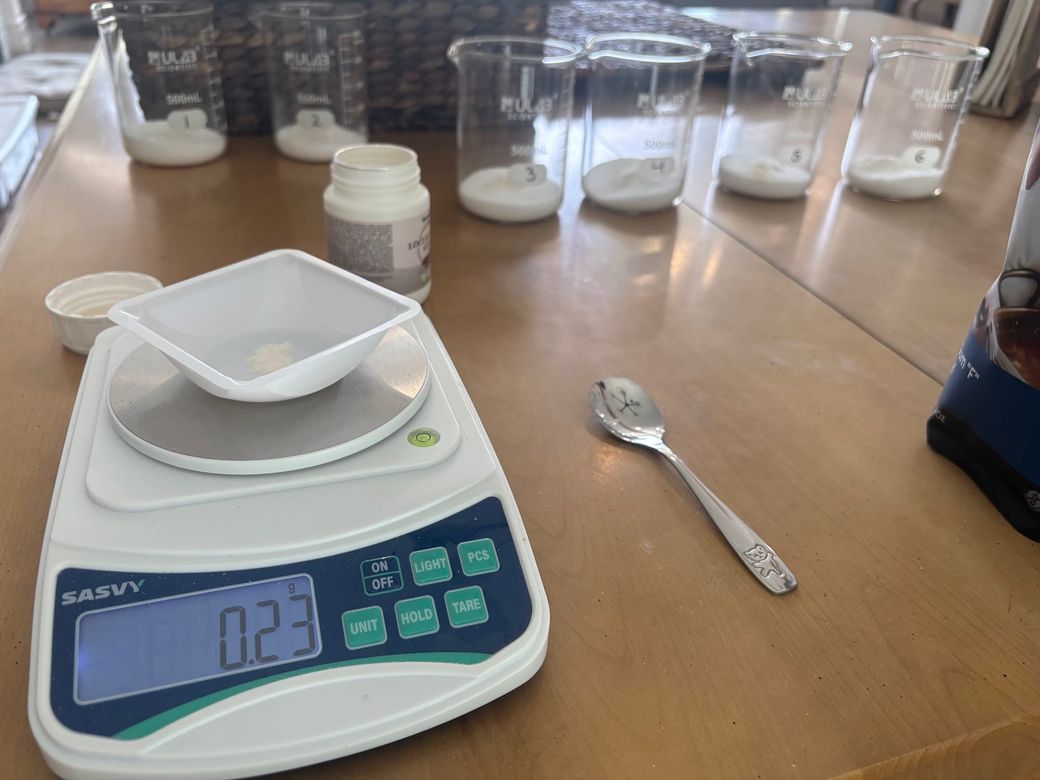
Learn
The first lab notes are being written. Nothing spun, nothing padded.
Trust gets earned with published work and products that hold up, in that order. This is where you can watch it happen — or not, which is also information.